
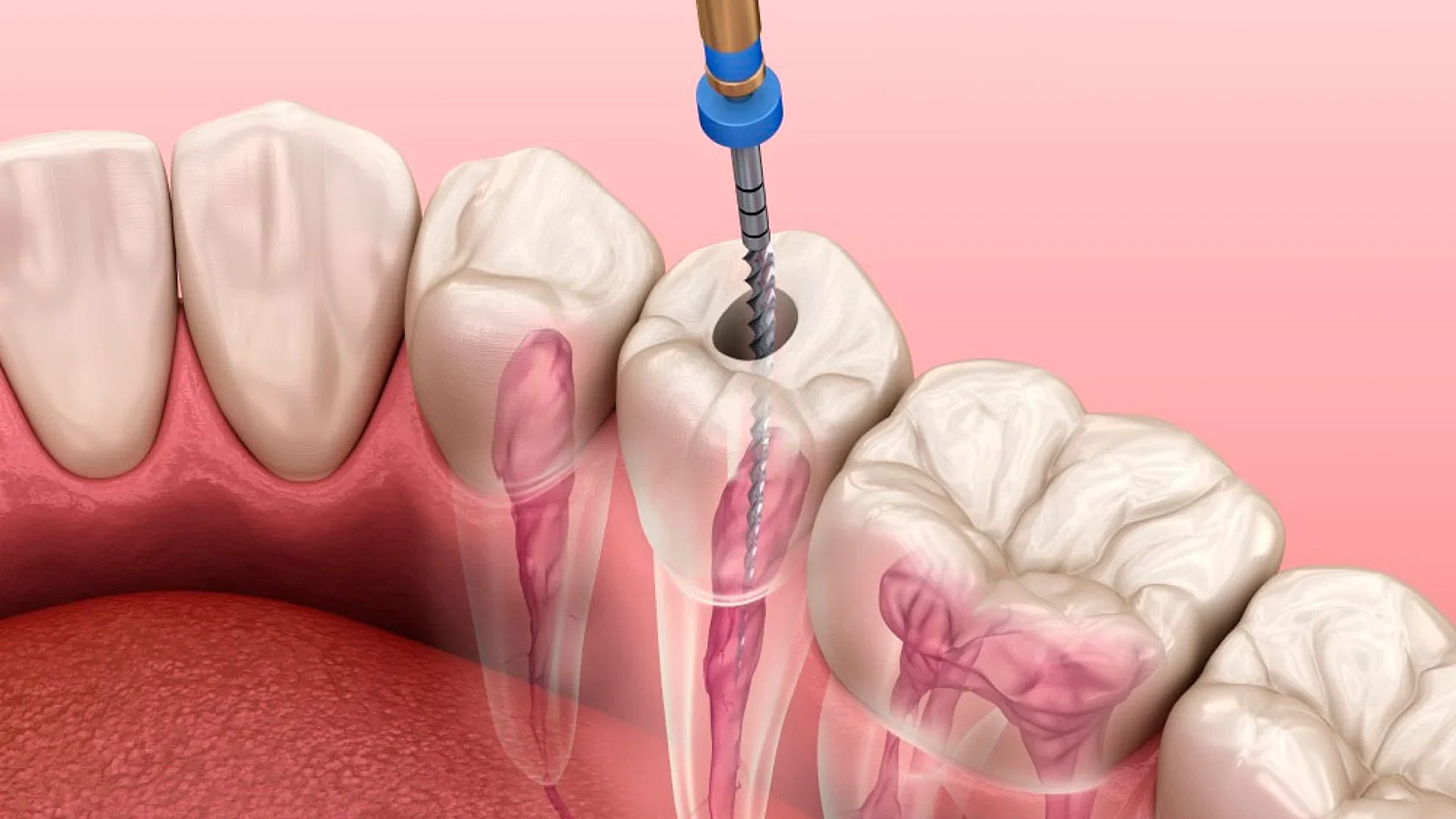
Root canal retreatment is a repeated endodontic procedure that involves removing the old filling material and performing a new hermetic obturation of the canals. In terms of complexity, this procedure is comparable to a microsurgical intervention: the doctor works within a microscopic space where precision determines the success of saving the tooth. For this reason, root canal retreatment is always performed by a highly qualified and experienced endodontist.
According to the European Society of Endodontology (European Society of Endodontology, 2023), the need for root canal retreatment arises in 35–60% of cases when the initial treatment was performed without a microscope or without full control of the surrounding tissues. In the countries of the Commonwealth of Independent States, the statistics are even higher — up to 50–70% of patients who visit a dentist with pain in a previously treated tooth require retreatment (data from the Russian Endodontic Society, 2022).
At Diplomat Med Center, retreatment is performed using an operating microscope, ultrasonic systems and modern biocompatible materials, which allows the tooth to be preserved and prevents complications.
Why inflammation develops after root canal treatment
The primary goal of initial endodontic treatment is to remove the infected pulp and then provide a hermetic filling of the canals. If any portion of the canal remains untreated or if a hidden infection is present at the apex, inflammation develops over time — apical periodontitis.
The main causes of inflammation:
The development of inflammation is most often associated with several key factors that collectively form a coherent clinical picture. One of the primary causes is insufficient enlargement and cleaning of the root canals during the initial treatment. If micro-particles of necrotic tissue or bacteria remain inside the tooth structures, they continue to multiply and gradually trigger an inflammatory process.
Another significant factor is reinfection through a non-hermetic crown or filling: when the restoration loses its integrity, microorganisms from the saliva can easily penetrate inside and infect the tissues again.
The situation is further complicated by the anatomy of the root canals. Some teeth have additional branches, lateral canals, or pronounced curvatures that are difficult to detect and properly clean without the use of an endodontic microscope. Such missed areas become a shelter for bacteria and a source of recurring inflammation.
There are also cases in which a patient develops a chronic, hidden inflammation in the area of the root apex. This process progresses slowly, remains unnoticed for a long time, and does not cause pain, but eventually leads to significant damage of the surrounding tissues.
Studies from the Journal of Endodontics (2021) show that up to 67% of recurrences are associated with anatomical features of root canals that were not identified during the initial treatment without magnification optics.
Symptoms indicating the need for root canal retreatment
Inflammation may present with clear symptoms or progress silently. Therefore, it is important to monitor any changes.
Typical symptoms:
- Return of tooth pain weeks or months after treatment.
- Pain when chewing or persistent discomfort when pressing on the tooth.
- Periodic sensation of “pressure” in the area of the tooth.
- Unpleasant odor or taste near the filling or crown.
- Formation of a fistula (a bump with pus) on the gum.
However, inflammation can also occur without symptoms. In such cases, changes are detected on X-ray or CT imaging, where bone destruction around the root apex becomes visible.
How root canal retreatment is performed
Retreatment is a precise, multi-stage procedure that requires a microscope and specialized instruments. The goal is to completely remove infected tissue and perform a new hermetic obturation.
Treatment stages:
- Removal of the old filling material — mechanical and/or ultrasonic disintegration of the previous obturation.
- Microscopic inspection — identification of missed canals, perforations or hidden branches.
- Antiseptic treatment — disinfection of the canal system using sodium hypochlorite and chlorhexidine-based solutions.
- Shaping the canals up to the physiological root apex.
- Hermetic obturation with biocompatible materials (gutta-percha + bioceramic sealer).
- Restoration of the tooth crown (filling, inlay or crown).
- Working under an operating microscope increases treatment precision by 5–20 times and allows the doctor to eliminate causes that were missed during the initial treatment.
Why it is important to retreat the tooth instead of extracting it
Extraction may seem like a quick solution, but it leads to irreversible consequences: bite disturbances, shifting of adjacent teeth, strain on the temporomandibular joint and the need for an implant.
A properly performed retreatment allows the natural tooth to be preserved for many years.
According to the European Journal of Endodontics (2022), the success rate of retreatment performed under a microscope exceeds 85–92%.
Root canal retreatment at Diplomat Med Center
At Diplomat Med Center, root canal retreatment is performed by expert-level endodontists using a microscope, ultrasonic navigation and bioceramic materials. We thoroughly eliminate the infection, control the quality of obturation using digital imaging and ensure restoration of the tooth without risk of recurrence.
Prior to treatment, a complete diagnostic evaluation is performed: X-ray / CT scan of the jaws, assessment of the gum condition, and, if necessary — restoration of the tooth crown.
This comprehensive approach allows the tooth to be preserved, function restored and complications prevented.
Diplomat Med Center also offers other areas of dentistry: treatment of dental caries, treatment of gum diseases, pediatric dentistry, orthodontics, professional dental cleaning. We use only certified materials and proven methods, ensuring safety and long-lasting results.
Make an appointment
We will select the optimal treatment plan, preserve the tooth and prevent recurrence of inflammation.
Diplomat Med Center — with care for your smile and health for years to come.