
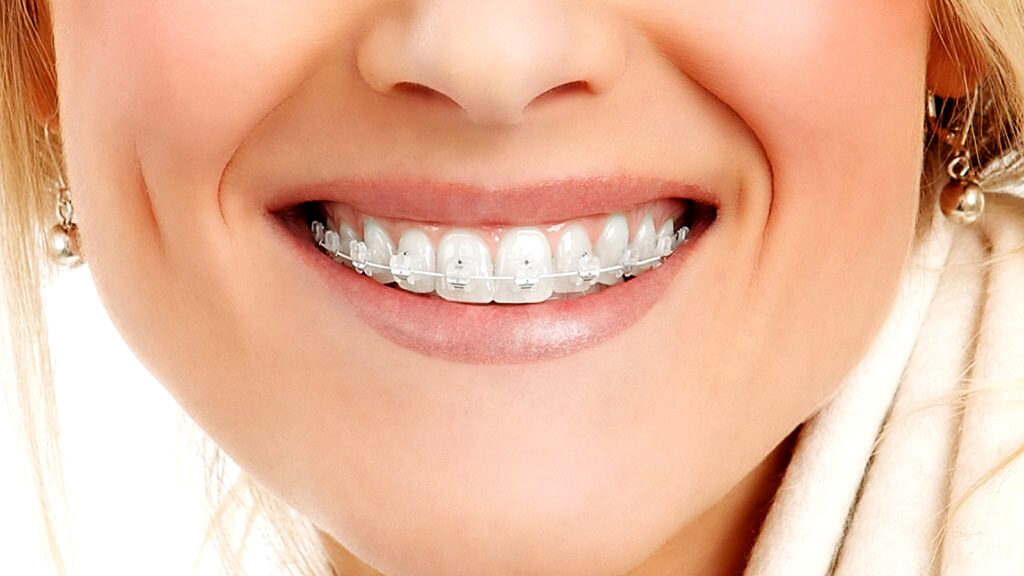
“Doctor, am I too old for braces?” I hear this question at consultations almost every week. Some patients have put off correcting their bite for years, some have got used to crooked teeth, and others have noticed that their smile has changed over time and no longer looks the way they would like.
Many people believe that bite correction is only possible in adolescence. That is a misconception. Bone tissue keeps renewing itself throughout life, so teeth can be moved at 30 and at 50. What matters is a proper assessment of the teeth, gums and the whole dental system, and an individual treatment plan.
What problems do adults see an orthodontist for?
Some patients want a more attractive smile, others notice that their teeth have started to shift, and others are referred by their dentist before prosthetic treatment or implants.
The most common problems are:
- crowded teeth;
- gaps between teeth (diastemas and tremas);
- overbite and underbite (distal and mesial occlusion);
- deep bite and open bite;
- crossbite;
- rotated teeth.
An incorrect bite is not only a cosmetic issue. Crowded areas are harder to clean, plaque builds up there and the risk of tooth decay and gum inflammation increases. Uneven chewing forces can also cause excessive wear of certain teeth.
In my practice, bite problems are often discovered by chance, during a consultation for something else. That is why I always assess not only the position of individual teeth, but how the whole dental system works.
Where does orthodontic treatment start?
The first step is an orthodontic consultation and a correct diagnosis. Before braces are fitted, a comprehensive assessment is carried out:
- clinical examination;
- photographs of the face and smile;
- digital scanning of the teeth;
- X-ray examinations when indicated.
At our clinic we perform both digital scanning and cone beam computed tomography (CBCT) when it is indicated. These methods give detailed information about the position of the teeth and jaw structures and help us plan treatment as precisely as possible.
Based on this data, the doctor assesses the position of the teeth, the relationship between the jaws, the condition of the gums and supporting tissues, and other factors that may affect treatment. An individual plan is then drawn up around the patient’s goals and needs.
It is important to check oral health before treatment begins. If there is active gum inflammation, it is treated first with periodontal therapy. Orthodontic treatment starts once the tissues are stable.
What types of orthodontic appliances are there?
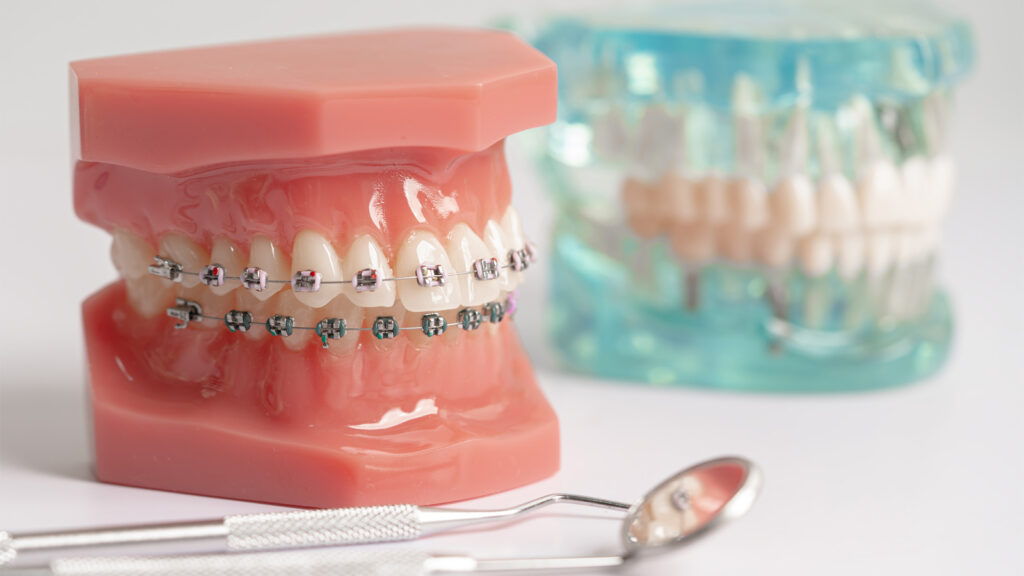
Depending on clinical indications and patient preferences, different orthodontic systems can be used.
Metal braces are strong and versatile and are used in a wide range of clinical situations.
Ceramic braces are close to the natural colour of the teeth, so they are less noticeable than metal ones.
Sapphire braces are made of a transparent material and look even more discreet during treatment.
Self-ligating braces hold the archwire with a special mechanism, without elastic or metal ligatures. They can make cleaning easier and in some cases reduce the number of adjustments.
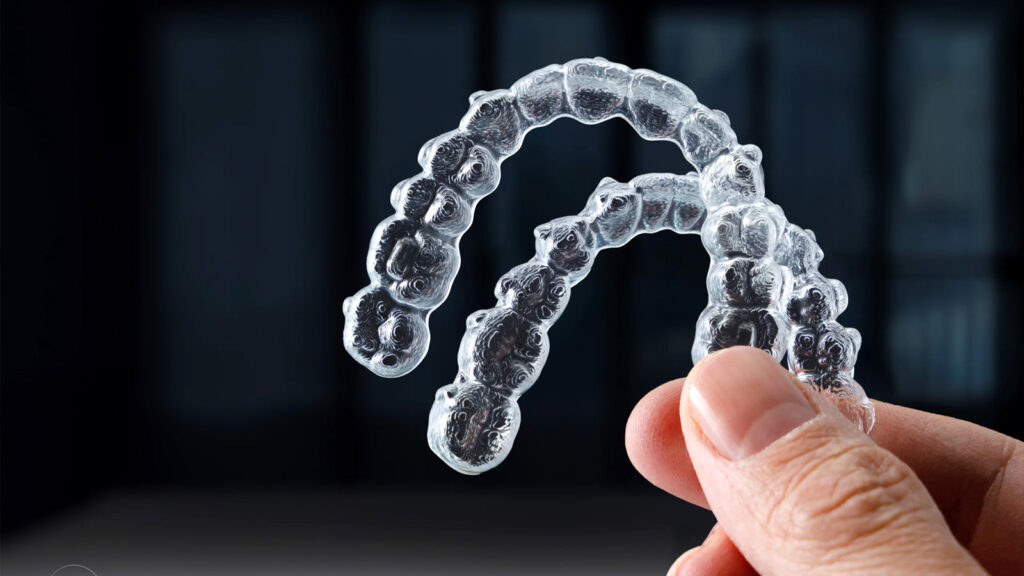
Clear aligners are custom-made removable trays that gradually move the teeth into the planned position. They are almost invisible and are removed for eating and brushing.
The success of treatment depends first of all on correct diagnosis, planning, biomechanics and monitoring of progress, not only on the system chosen. Read more about the types of braces and their pros and cons in our orthodontics section.
Braces or aligners: which to choose?
Braces are an effective solution for a wide range of bite and alignment problems, including complex cases. You can choose metal, ceramic or sapphire braces, which differ in how visible they are. Braces require more careful and regular oral hygiene, because food collects around them, so it is especially important to clean your teeth properly after meals.
Clear aligners are almost invisible and make oral hygiene easier, as they are removed for eating and brushing. But they require commitment and discipline: aligners should be worn about 22 hours a day, as recommended by the orthodontist. They are also not suitable for every case — in some complex problems braces give better control over tooth movement. Learn more about aligners on our Invisalign page.
There is no single system that is best for everyone. The choice is made individually, based on the diagnosis, the complexity of the case, the treatment goals and the patient’s preferences.
How long does treatment take?
Treatment time is individual and depends on the type and complexity of the problem, the degree of crowding, whether extra space needs to be created, the condition of the gums and the patient’s biological characteristics.
On average, orthodontic treatment takes about 1–1.5 years, and in complex cases up to 2.5 years. These estimates assume regular visits to the orthodontist — usually once every 1.5–2 months — to adjust and check the appliance. The interval between visits and the total duration are set individually by the doctor.
Teeth move thanks to bone remodelling: bone is resorbed on the side the tooth is moving towards and new bone forms on the side it is moving away from. This takes time, and controlled orthodontic forces are essential for safe treatment.
The goal is not the fastest possible result, but a functional and stable bite that preserves the health of the teeth and surrounding tissues.
How does everyday life change with braces?
You will not need to change your lifestyle dramatically. In the first days after fitting and after adjustments you may feel pressure and sensitivity — this usually eases within 3–7 days.
What matters during treatment:
- Diet. Avoid very hard and sticky foods — they can damage the appliance or make a bracket come off. More in our article on eating with braces.
- Hygiene. Food gets trapped around the brackets and under the wire. You will need an orthodontic toothbrush, interdental brushes and possibly a water flosser — your doctor will recommend the right set. See how to clean your teeth with braces.
- Check-ups. Come regularly for adjustments and professional cleaning.
Most patients get used to braces quickly and return to their normal routine.
Retention: why keeping the result matters after braces come off
Removing braces is not the end of treatment. The gum and periodontal fibres remodel more slowly than bone and for a while can “pull” the teeth back towards their original position. In addition, the position of the teeth changes throughout life under the influence of chewing forces, pressure from the lips and tongue, and age-related changes in the bone.
To keep the result, the doctor may recommend two types of retention:
- Fixed retainer — a thin wire bonded to the inner surface of the teeth. In many cases it is recommended for a very long time, sometimes for life, with regular check-ups and as long as it stays intact.
- Removable retainer — clear trays that are usually worn every night for the first 2–3 years after braces. Then, depending on how stable the result is, wear is gradually reduced: first to a few nights a week, and later possibly to one night a week.
The retention plan and its duration are set individually by the orthodontist. It is important to understand that retention is not a temporary stage that must come to an end, but part of keeping the result for many years.
In my practice I notice that patients sometimes underestimate this stage. Yet following retention recommendations is exactly what decides how stable the result will be.
Frequently asked questions at the orthodontic consultation
Is it too late to correct my bite as an adult?
In most cases age is not a limitation. The condition of the gums, the bone level and the health of the teeth matter much more. With a correct diagnosis and well-chosen biomechanics, teeth can be moved in adults too.
Do teeth have to be extracted before braces?
No, far from always. The decision depends on the degree of crowding, lack of space, position of the incisors, facial profile and bite. I always consider the possibility of keeping the teeth and recommend extractions only when there are clear indications.
Can I have braces if I have crowns, fillings or implants?
Usually yes. Teeth with crowns and fillings can be moved, but their condition needs to be assessed first. Implants are fused with the bone and do not move — their position is taken into account when planning.
Can braces be fitted on one jaw only?
Sometimes, but the decision is made after assessing how the upper and lower teeth meet. The goal is not only straight teeth on one jaw, but a correct and stable bite.
Can teeth become crooked again after braces?
Yes, if the retention stage is not followed. Retainers hold the result while the tissues adapt and protect against age-related shifting.
More answers in Frequently asked questions regarding braces.
What matters is not age, but the wish to change your smile
Orthodontic treatment for adults is more than straight teeth. It means a correct relationship between the dental arches, easier oral hygiene and the health of the whole dental system.
Age in itself is not a contraindication. What matters is a proper assessment of the teeth, gums and jawbone, and choosing the right method for each patient.
A beautiful smile is not a privilege of a certain age. It is the result of a decision that is never too late to make. And modern orthodontics makes this journey well planned, comfortable and predictable.
Want to know if orthodontic treatment is right for you? Book a consultation at Diplomat Med Center in Chișinău — we will run a full assessment and discuss your treatment options. Types and prices of braces at our clinic: Braces in Chișinău.